

Few decisions shape a commercial indoor playground’s success as fundamentally as the choice between a fully custom design and a pre-manufactured system. One promises originality and spatial efficiency; the other delivers speed and predictable cost. Both can be safe, engaging, and profitable—but only when matched to the right operational context. This article provides a structured decision framework, not a product pitch, so you can evaluate trade-offs clearly before approaching any supplier.
Understanding What “Custom” and “Pre-Made” Actually Mean
Before weighing pros and cons, it helps to strip away marketing labels. In the playground industry, these terms sit on a spectrum.
| Fully Custom Design | Pre-Made (Modular) Systems | |
| Design approach | Built from the ground up to fit a specific space, theme, or narrative | Assembled from a library of pre-engineered components and tested configurations |
| Lead time | Typically 8–16 weeks for design, engineering, and production | As short as 2–6 weeks, depending on inventory and finishing choices |
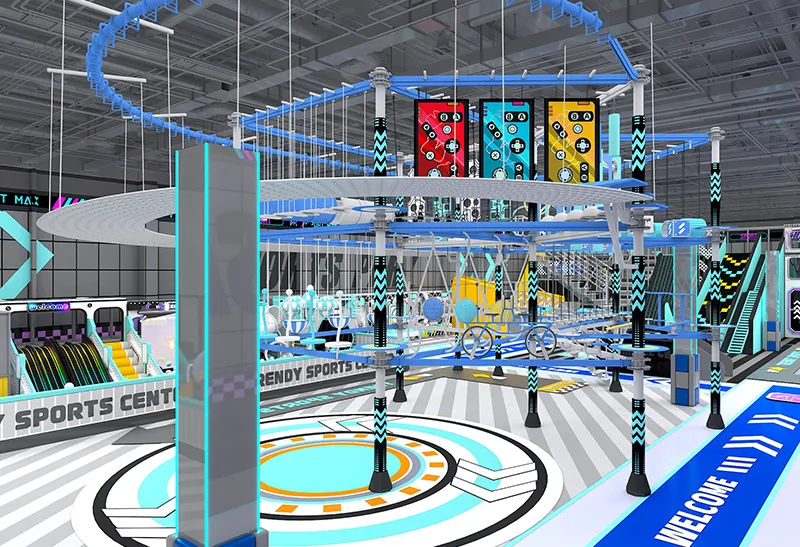
| Unique look | One-of-a-kind theming, bespoke colors, and tailored play zones | Standardized towers, slides, and panels with limited, pre-defined customization |
| Compliance path | Requires project-specific engineering and certification effort | Uses pre-certified components; final layout still needs site-specific assessment |
| Initial cost | Higher upfront investment due to design and fabrication hours | Lower upfront; costs scale with add-on modules |
| Long-term flexibility | Harder to reconfigure without significant rework | Easier to expand, relocate, or replace individual modules |
A middle ground—hybrid design—is also common: starting with proven structural modules and wrapping them in custom theming elements. This balances cost control with brand differentiation, and it is worth discussing early with a manufacturer that has in-house design capabilities. For example, when evaluating options for fully customized indoor structures, it is useful to understand how a supplier integrates theming onto an engineered safety chassis.
No matter which path you take, safety remains non-negotiable. According to a 2020 update from the U.S. Consumer Product Safety Commission (CPSC), public playground injury patterns consistently point to the importance of impact-attenuating surfacing and proper guardrail design—requirements that apply equally to custom and pre-made equipment. Reputable manufacturers test against ASTM F1487 or EN 1176 regardless of the design route.
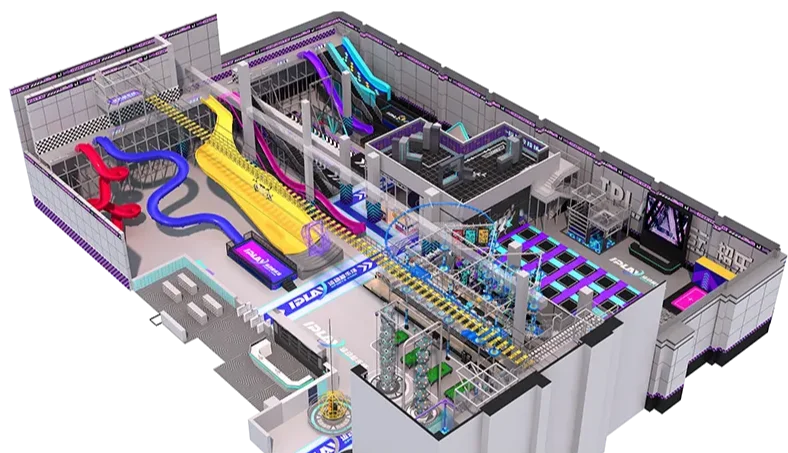
Comparing Key Decision Factors Side by Side
When operators ask “which is better,” the real question is usually about three constraints: budget certainty, timeline pressure, and competitive differentiation. The table below maps decision factors to the approach they tend to favor.
| Decision Factor | If You Prioritize This… | The Leaning |
| Time to open | You need to be operational within 3 months | Pre-made, modular systems |
| Brand identity | The playground must tell a unique story (e.g., a local mascot, a proprietary IP) | Custom or hybrid |
| Space constraints | Irregular floor plan, low ceilings, or structural columns to work around | Custom design maximizes every inch |
| Future scalability | You plan to expand in phases or relocate within 5 years | Pre-made modular systems |
| Total 5-year cost | You factor in maintenance, repairability, and part replacement | Pre-made (widely available spare parts) |
| Throughput demands | Peak hourly traffic exceeds 200 children | Custom layout can optimize flow and capacity zones |
A common scenario: a family entertainment center in a competitive market selects a custom themed structure to become a destination attraction, while a chain of daycare centers standardizes on pre-made units to keep maintenance and staff training uniform across locations. Neither choice is inherently superior—the fit depends on your operational model.
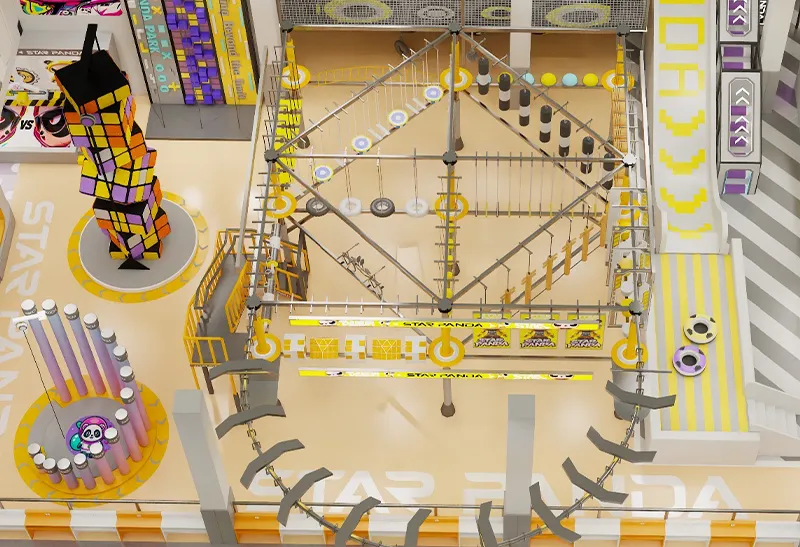
For venues that must serve very high traffic without congestion, layout becomes as important as equipment choice. Custom designs can engineer dedicated entry/exit paths, separate toddler zones, and flow control features that a standard catalog layout may not address. This is why sites expecting peak visitor density often benefit from reviewing how high-capacity playground layouts are engineered.
Five Steps to Assess What Your Venue Really Needs
Instead of starting with a catalog or a mood board, use this sequence to surface your true requirements.
-
Map your physical space and circulation
Measure clear dimensions, ceiling heights, column locations, and emergency egress paths. A pre-made system that fits on paper may still leave dead zones or create bottlenecks. Understanding the buildable area helps you decide whether off-the-shelf modules can fill the space efficiently or whether custom design is needed to avoid wasted square footage. -
Define your primary user age band and session duration
A toddler zone has different fall-height limits and sightline requirements than a 5–12-year-old structure. Pre-made components are typically designed for specific age bands; mixing them across a wide age range may require custom bridging elements. Document how long children typically stay—longer sessions demand more varied play loops to prevent boredom. -
Clarify your competitive differentiator
If the playground is one of five similar attractions within a 10-minute drive, thematic originality may be the deciding factor for parents. If it is the only indoor play option in town, a well-executed pre-made system may already be compelling enough. Be honest about whether uniqueness drives revenue or is simply nice to have. -
Calculate total cost of ownership (TCO), not just the invoice price
Include freight, installation, surfacing, inspections, and annual maintenance. Ask about spare parts availability: custom elements often mean longer lead times for replacements. A pre-made system with a 10-year spare parts guarantee can reduce downtime significantly, which directly impacts revenue continuity. -
Verify safety certification and local code compliance
Request evidence of third-party testing to ASTM F1487, EN 1176, or the equivalent standard in your region. A custom design should come with a structural engineer’s stamp and a post-installation inspection report. Pre-made components should have existing certification documents that can be referenced in the final installation’s compliance package. If a provider cannot produce these, walk away regardless of the design type.
Completing these steps gives you a requirements brief rather than a preference list. That brief then becomes the foundation for evaluating specific solutions, whether custom or pre-made.
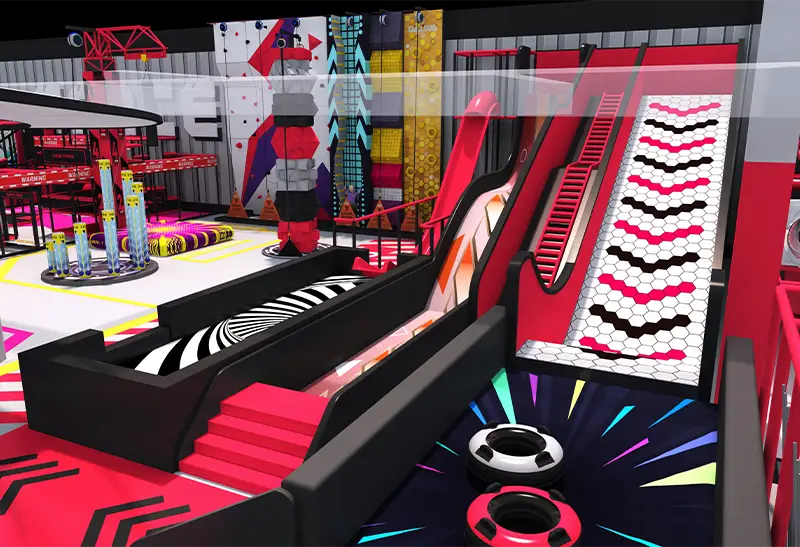
Real-World Scenarios Where Each Approach Excels
Scenario A: The Flagship Shopping Mall Anchor
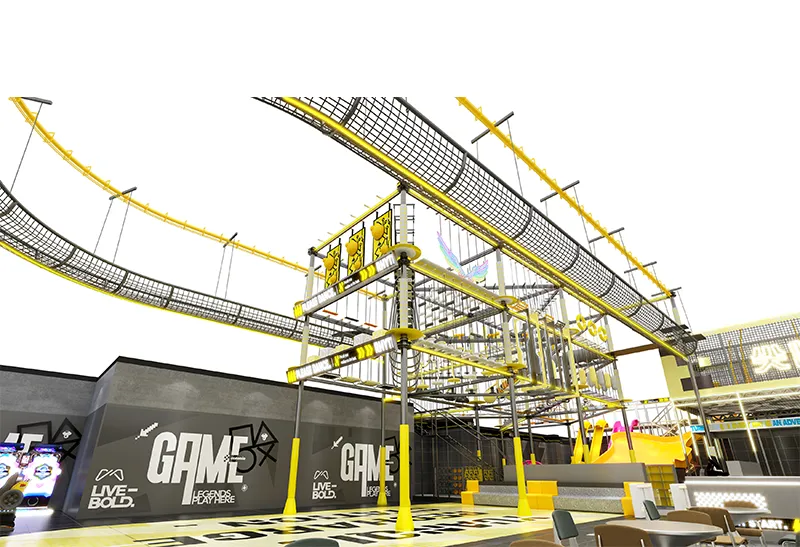
A large shopping center wants an indoor playground that doubles as an Instagrammable landmark, driving footfall to surrounding retail. The floor plate is irregular, with glass atriums and structural columns. A custom design transforms constraints into features—winding tunnels between columns, transparent sections to maintain sightlines, and a distinctive local theme that no competitor can replicate. In this context, the higher initial investment is recovered through increased dwell time and repeat visits. Operators in this situation often look at installations designed for commercial destinations to see how theming and traffic flow have been solved at scale.
Scenario B: The Multi-Site Daycare Operator
A childcare group is opening four new locations within six months. Each site has a rectangular dedicated play room of roughly 80 square meters. The priorities are speed of setup, consistent safety compliance, and the ability to move equipment if a lease ends. Pre-made modular systems, ordered with identical configurations, allow bulk purchasing and fast installation. Staff training on supervision and cleaning becomes standardized, reducing operational overhead. Spare parts can be held centrally and dispatched overnight. Here, modularity is not a compromise—it is an operational strategy.
Next Step: From Decision Criteria to Detailed Comparison
You will know you are ready to move forward when you can articulate:
-
Your must-have design parameters (space, age group, throughput)
-
Your timeframe and the financial impact of delays
-
How the playground supports your brand and revenue model
Once these key factors are clear, comparing the specific specifications of available options becomes the logical next step. You can explore configurations that range from fully custom bespoke builds to modular series built for rapid deployment. For a deeper understanding of the financial side, it is also helpful to learn how to calculate the return on investment for a new playground, factoring in increased admissions, party bookings, and secondary spend.