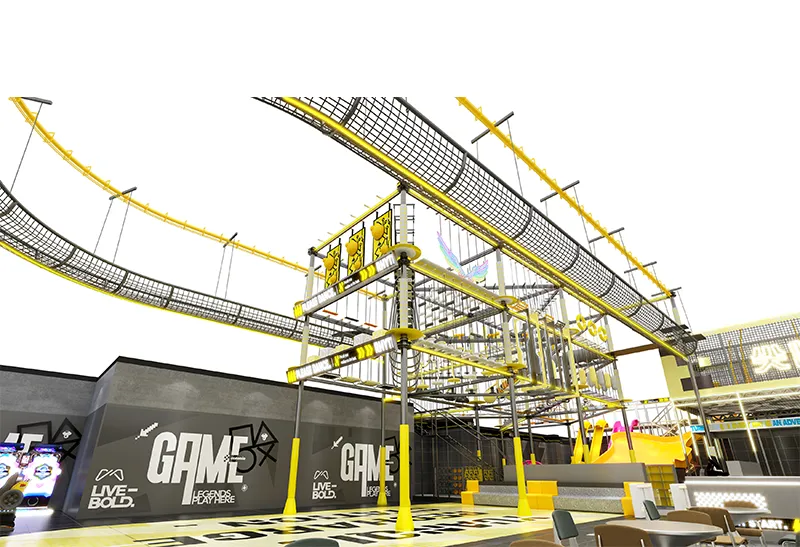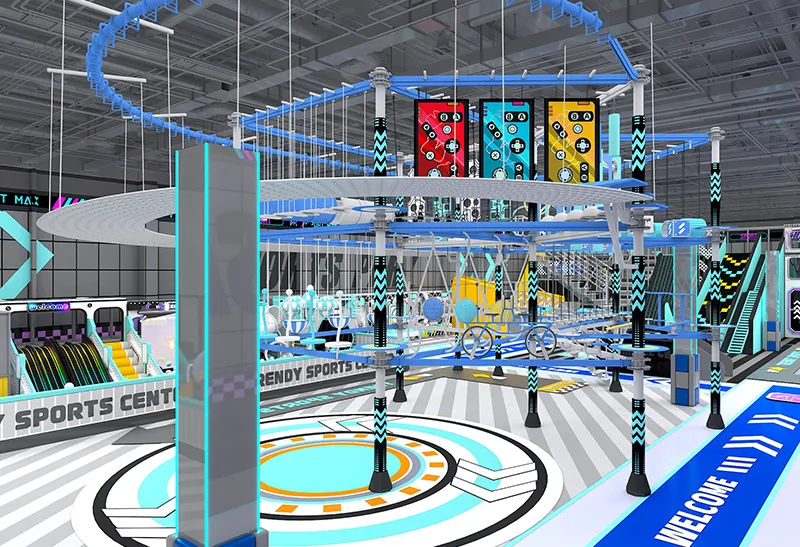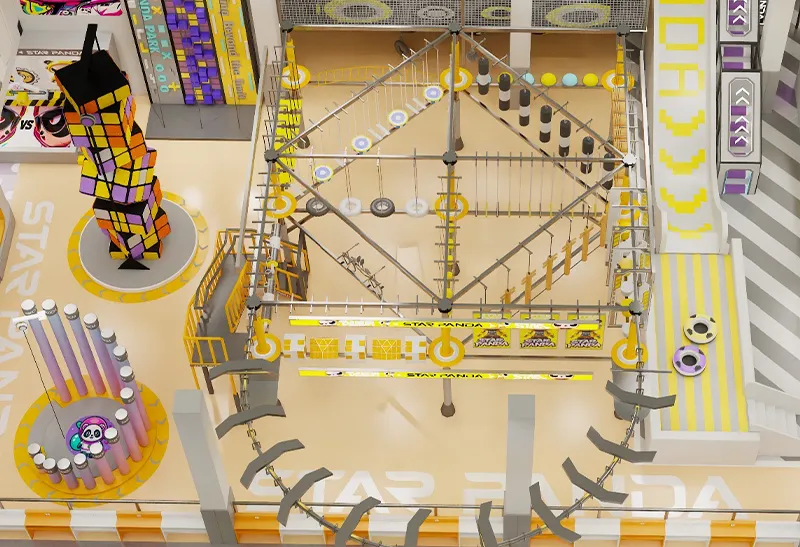


Family entertainment centers (FECs) rely on immersive aerial challenge zones to drive repeat visits and youth customer flow. Yet many venue owners overlook standardized operation systems, leading to hidden safety hazards, frequent equipment breakdowns and liability risks. This comprehensive guide sorts out entry restrictions, instructor protection workflows, emergency handling and tiered maintenance rules aligned with EN1176, ASTM and IAPA industry standards, helping operators build stable, compliant high-thrill play zones with minimized downtime.
Core Facility Configuration & Unique Material Advantages
All qualified aerial challenge zones integrate steel structural frames, tension rope nets, non-slip foot platforms, full-body safety harnesses, locking main carabiners, buffer lanyards and anti-fall arresters. Unlike automated amusement rides, this attraction operates entirely under manual supervision with a mandatory dual-instructor protection system—no automatic safety devices can replace human oversight per global amusement safety codes.
A key differentiator between premium and low-cost setups lies in sliding track manufacturing. Top-tier suppliers adopt one-piece molded steel forming for slide channels, delivering dimensional consistency, zero deformation under heavy load and smooth sliding surfaces without sharp burrs. Budget alternatives rely on laser-cut iron tube channels with rough internal edges that abrade safety lanyards and create jamming risks during participant movement. If you want to compare structural material specifications for custom aerial zones, check detailed configuration parameters here.
Non-Negotiable Visitor Entry Screening Standards
Strict entry filtering eliminates 70% of on-site emergency incidents, per IAAPA’s 2026 venue safety report. All participants must satisfy rigid physical, age and dress criteria before accessing high platforms:
- Age & size threshold: Minimum 12 years old, standing height above 1.2m
- Weight range: 40kg to 90kg; underweight users risk unstable harness fitting, overweight visitors exceed frame load limits
- Health exclusions: Hypertension, heart disease, asthma, epilepsy, vertigo, spinal/joint injuries, post-surgery recovery patients, pregnant women, intoxicated guests and those with persistent physical weakness are fully prohibited
- Dress code: Closed-toe sports shoes required; high heels, slippers, loose scarves, oversize hoodies and long unbound hair are banned. All valuables including watches, necklaces and smartphones must be stored in lockers to prevent falling hazards.
Venue front desks should post printed screening checklists and train staff to conduct verbal pre-activity medical confirmations before safety briefings.
Step-by-Step Pre-Experience Preparation Workflow (Instructor-Led)
Standardized pre-play procedures ensure every participant understands safety mechanics and eliminates harness fitting errors. The process follows four fixed stages:
- Safety briefing: Instructors demonstrate obstacle movement logic, load-bearing points, prohibited behaviors and unified hand signal commands, confirming visitor comprehension via verbal feedback.
- PPE pre-inspection: Every harness, carabiner and buffer device undergoes visual damage checks; cracked webbing, rusted locks or stretched lanyards are immediately removed from service.
- Systematic harness fitting: Staff fasten shoulder, chest, waist and leg straps sequentially until gear fits tightly against the torso with no slack or sliding room. Two separate instructors double-lock all main carabiners and anti-fall arresters for dual verification.
- Ground trial simulation: Participants complete controlled pulling, turning and side-shifting movements on flat ground to test harness comfort and avoid pinching during aerial traversal.
Venue teams should record all PPE inspections in daily operation logs for third-party safety audits. Operators looking for ready-to-use briefing script templates and harness fitting training materials can request professional operation support documents.
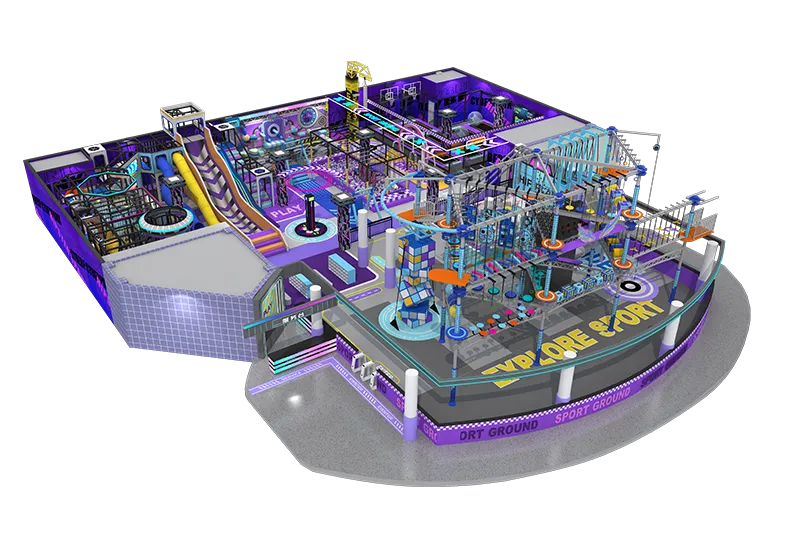
Dual Protection Operation Specifications for Instructors & Visitors
Visitor Behavior Rules During Aerial Traversal
All participants must follow the three-point support principle at all times: maintain three fixed contact points with obstacles while moving only one limb. Running, jumping or violent shaking of steel frames is strictly forbidden. Additional core rules:
- Never move outside structural frame boundaries; avoid stepping on fragile rope net edges or non-load-bearing support points
- No horseplay, pushing or grabbing neighboring visitors while elevated; do not touch safety belay systems without instructor permission
- Remain stationary on platforms when instructed; complete descends only under staff command, no early self-release of locking gear
Mandatory Dual-Instructor Protection Standards
The dual-protection system is a non-negotiable regulatory requirement for high-altitude challenge attractions. One lead belay instructor controls safety rope tension, while a secondary backup staff monitors participant posture and platform clearance. Key operational rules:
- Neither instructor may leave their post or split attention during active sessions
- Belay ropes maintain moderate tension to avoid excessive slack (which creates fall distance) or over-tightening that restricts natural movement
- Staff pre-emptively absorb impact force during participant slips or jumps to eliminate sudden load shocks on steel frames
- Only one visitor per obstacle zone at any time; the next participant may start climbing only after the previous guest fully exits the high platform and removes all safety gear
Standard Exit & Post-Activity Disassembly Process
Many minor injuries occur during rushed post-experience gear removal, so venues must enforce a four-step exit routine:
- Descend slowly to ground-level landing platforms under instructor guidance, placing feet firmly on solid flooring before releasing hand holds
- Stay stationary at the landing zone while instructors sequentially unlock each safety component; self-unclipping of carabiners or harness straps is forbidden
- Fold and return all protective equipment to designated storage racks, then clear the entire aerial frame footprint to avoid being positioned under elevated climbers
- Repeat full PPE inspection and dual lock verification for every new participant, even for guests purchasing consecutive play sessions
Zero-Tolerance Red Line Safety Regulations
These rules form the venue’s core liability defense and must be enforced with immediate activity suspension for violations:
- No uncertified staff or untrained visitors may touch, climb or operate any part of the aerial frame without dual instructor supervision
- Modification, cutting or disassembly of steel frames, safety ropes, webbing and locking hardware is completely prohibited
- The area beneath all elevated obstacles must stay clear of standing, walking or gathering guests to prevent injury from falling equipment or participants
- Immediate full shutdown during hazardous weather: thunderstorms, sustained winds over level 6, heavy fog, icy surfaces or slippery flooring
- Cease all operations if frames show abnormal shaking, structural creaking, loose anchor bolts or detached safety lanyards; evacuate all participants immediately
Emergency Incident Response Disposal Guide
Venue staff need pre-rehearsed response protocols for four common on-site emergencies:
- Visitor discomfort (dizziness, palpitations, leg weakness): Lead belay staff retract safety ropes gradually to lower the participant to ground safely; offer rest facilities and contact medical services for severe symptoms.
- Accidental slipping or temporary suspension mid-air: Instruct visitors to grip fixed support points steadily without struggling; belay operators control rope speed for a smooth controlled descent to a safe platform.
- PPE jamming or hardware snags: All participant movement halts instantly; visitors wait stationary while instructors resolve entanglements, no forced pulling of locked gear allowed.
- Sudden severe weather triggers: Coordinate a sequential evacuation of all elevated visitors, cut off surrounding power supplies and lock all attraction access gates until conditions normalize.
Tiered Preventive Maintenance Schedule (Daily / Weekly / Monthly)
Consistent tiered maintenance extends attraction service life by 60% and passes all third-party SGS and TÜV safety audits, per global playground equipment standards:
- Daily closing inspection: Clean molded steel sliding tracks; visually check pulleys, harness fabric integrity, carabiner locks and anti-fall braking functions. Log all minor wear for timely replacement.
- Weekly deep service: Torque all structural anchor bolts to factory specifications; lubricate pulley bearings and test brake responsiveness under full load simulation.
- Monthly comprehensive structural audit: Complete steel track flaw detection, full frame stability testing and tensile strength verification for all safety harnesses and lanyards.
Venue operators can reduce long-term maintenance costs by selecting structures engineered with easy-access inspection points and standardized spare part compatibility. To explore modular aerial obstacle zone designs with simplified maintenance access, view custom park layout solutions.
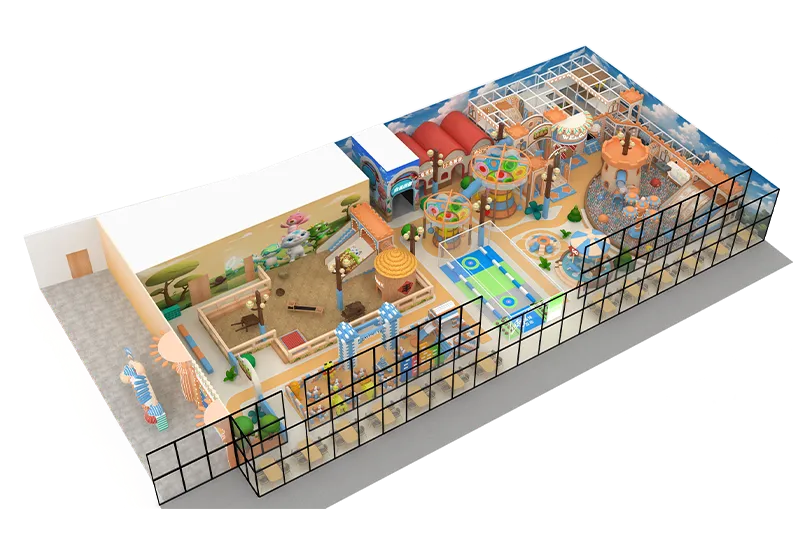
Final Tips for Long-Term Stable Venue Operation
High challenge aerial attractions deliver strong customer retention, yet their profitability relies entirely on standardized safety management and regular maintenance. Investing in premium molded steel structural components eliminates recurring repair costs from low-quality rough-cut iron tracks, while fully documented daily inspection logs protect venues against liability claims during safety audits.
If you are planning a new FEC or upgrading existing thrill zones with integrated aerial challenge paths, partnering with a full-cycle playground equipment supplier delivers one-stop support from site dimension analysis, custom 3D layout rendering, precision manufacturing, global shipping and on-site professional installation. With 18 years of global project experience across 100+ countries and 10,000+ completed indoor play venues, the team provides end-to-end compliance guidance aligned with EN1176, ASTM and CE safety standards. Reach out to get tailored aerial attraction planning and maintenance consultation for your venue’s unique space and target visitor demographics.