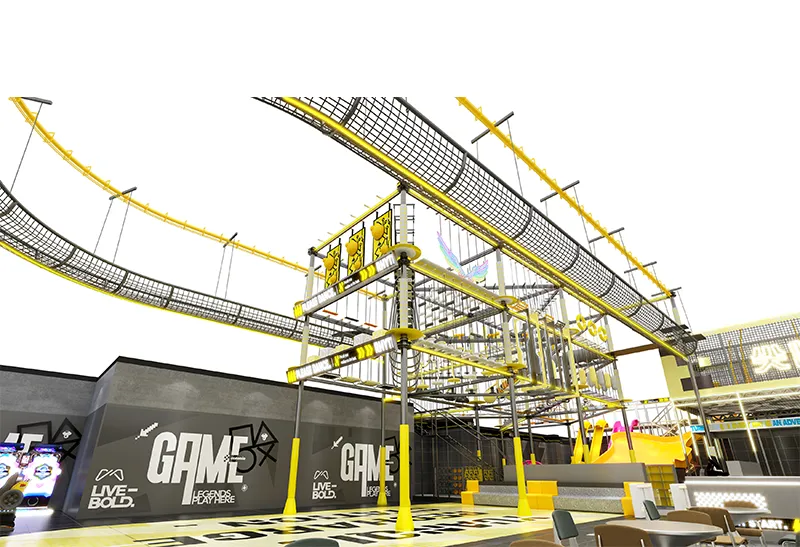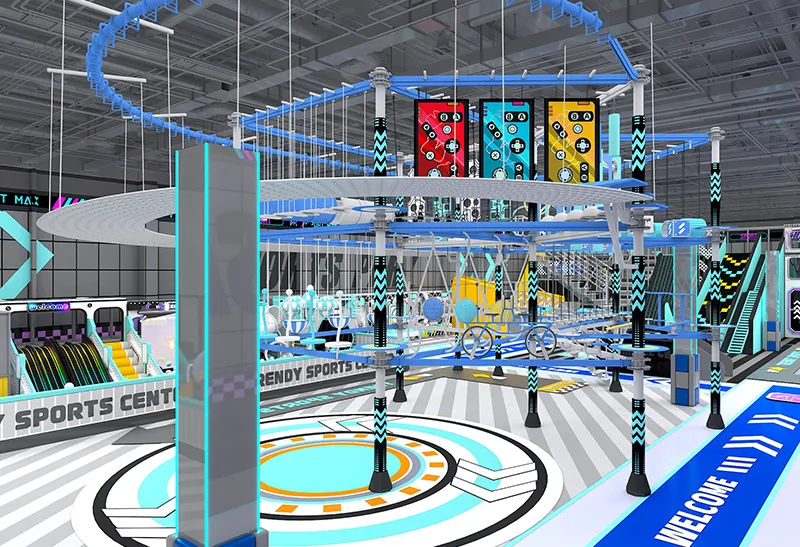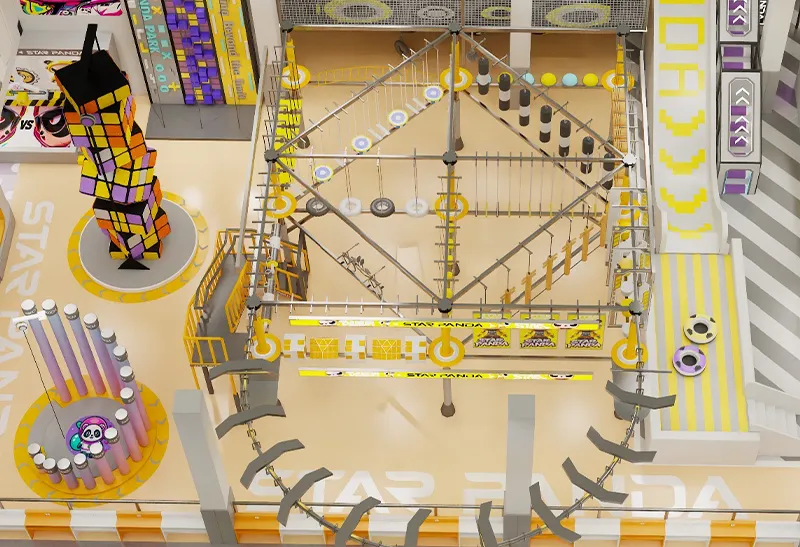


Every morning, before the first excited squeal echoes through the play structure, a quiet ritual determines how the rest of the day unfolds. A loose bolt, a worn-out section of netting, or an unsecured gate post could turn the best-designed facility into a liability. For operators of family entertainment centers, the real work starts long before the doors open.
However, maintenance is rarely about dramatic failures. It’s about the slow, quiet wear that goes unnoticed until a near-miss or a sudden equipment shutdown. One operator I spoke with in Ohio put it simply: “The day you skip the checklist is the day something hides in plain sight.” His team now uses a laminated daily walkthrough sheet – not because regulations force them to, but because they’ve learned that consistent checks prevent most Sunday-night callouts from the maintenance team.
The good news is that building a reliable daily routine doesn’t require engineering degrees. It requires structure, the right focus points, and an honest understanding of what actually breaks. Let’s walk through a practical framework you can adapt starting tomorrow.
The non-negotiable zones of a daily walkthrough
Experienced operators tend to focus on four high-risk zones before anything else. These aren’t the obvious cleaning tasks; they’re the structural and mechanical checks that, if missed, lead to cascading issues.
-
Connection points and fasteners
Hours of bouncing, climbing, and sliding loosen things. Give special attention to bolted joints on elevated platforms, tube connectors on modular climbers, and anchor points where posts meet the floor. A torque-check habit – even a quick visual indicator paint mark – can reveal movement that shouldn’t be there. -
Surfacing integrity
Whether you use poured-in-place rubber, tiles, or loose-fill, the critical measurement is depth and coverage. Common traffic patterns create displacement zones directly under slide exits, swing arcs, and at the base of climbing walls. Simply raking loose-fill back into place isn’t enough; measure the depth in at least three spots per zone against the minimum required by ASTM F1292. If you find a thin spot, cordon it off immediately and document it. -
Entanglement and entrapment hazards
Daily checks should scan for anything that shouldn’t be there: a frayed climbing rope strand, a zip tie leftover from a party decoration, a S-hook that has opened slightly. Pay particular attention to rope net junctions and flexible bridges – areas where small fingers or drawstrings can catch. The ASTM F1487 standard provides exact probe tests for head and neck entrapment; while you won’t perform the full gauge test daily, your walkthrough should flag anything that doesn’t look right. -
Operational elements and signage
Interactive play panels, timing systems, and electronic elements need a quick function check. Dead batteries in a sound panel might seem trivial, but interactive features are a core part of the guest experience. Also, check that signage is present and legible – height restrictions, parental supervision notices, and maximum user capacities aren’t just compliance boxes; they directly influence user behavior.
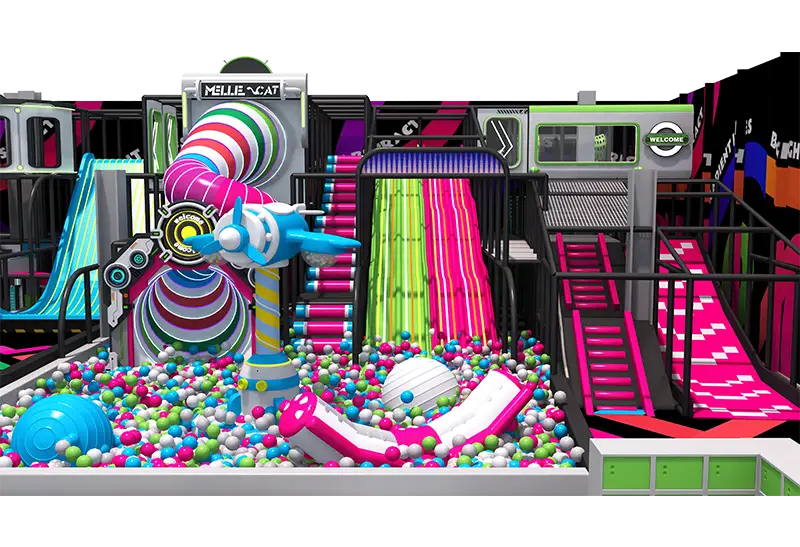
The 15-minute routine that saves hours
You don’t need a full-blown audit every morning. The most functional checklists follow a “3-pass” approach that can be done while opening the facility:
-
Pass 1 – Visual sweep (5 min): Walk the perimeter and all high-traffic paths. Look for displaced surfacing, obvious damage, liquids on surfaces, and anything out of place. Touch nothing yet, just observe.
-
Pass 2 – Tactile check (7 min): Run your hand along railings and net edges. Apply body weight to steps and platform edges. Wiggle posts. Feel for movement that shouldn’t be there. You are feeling for looseness that eyes can miss.
-
Pass 3 – Critical function test (3 min): Test gates, latches, and any interactive play features. Confirm that all exit zones are clear and that slide paths are unobstructed. A quick slide down the tallest slide tells you more about surface cleanliness and path safety than any remote observation.
Mistakes even seasoned operators make
Even teams with years of experience drift into blind spots. Here are three patterns worth knowing:
-
Checking the same few spots every day. The climbing structure gets inspected, but the less-popular toddler zone gets a glance from 20 feet away. Wear distributes unevenly, and under-used areas can degrade in surprising ways, especially if they sit near HVAC vents or suffer from undetected moisture.
-
Ignoring the “drumbeat” of small fixes. A loose handrail cap gets logged, then re-logged, and still isn’t tightened for a week. Small deferred maintenance signals to staff that the checklist isn’t taken seriously. It also creates a cascading effect: one loose part accelerates wear on adjacent components.
-
Treating documentation as optional. When an incident occurs, a blank logbook or a week of missing signatures creates a liability scenario that no insurance policy appreciates. Digital logging tools help, but even a paper checklist that’s time-stamped and filed correctly is a powerful piece of evidence that due diligence was performed.
Building a system that your team will actually use
The most beautifully designed checklist means nothing if it feels like a burden. The operators who succeed with long-term maintenance programs share a few habits:
-
They rotate inspection responsibility so multiple eyes see the equipment each week. Fresh eyes spot different things.
-
They tie the walkthrough physically to the opening procedure – the checklist is as natural as turning on the lights.
-
They use visual standards. Instead of “check net condition,” their checklist reads “net should have no broken strands longer than 2 inches, all junction knots tight.” Clarity removes interpretation.
If the daily routine reveals a growing problem that a simple tightening can’t fix, that’s the point where the right equipment design becomes a multiplier for safety and efficiency. Thoughtfully engineered commercial play environments reduce the number of daily failure points from the start. When structure joints are precision-fabricated and connection points are designed for inspection accessibility, the morning walkthrough shifts from firefighting to verification.
For operators seeking an approach that bakes reliability into the equipment itself, looking into purpose-built commercial play systems can be a natural next step. Manufacturers who understand the daily reality of playground operation design their structural connections, surfacing compatibility, and wear-prone elements differently. If you are evaluating options that support a smoother operational rhythm, you might explore Qilong’s range of modular indoor play solutions, which include features like rapid-inspection fastener covers and documentation-ready layout maps.
From checklist to culture
The daily inspection isn’t an administrative hoop. It’s the moment an operator takes ownership of the experience that’s about to unfold. One maintenance lead told me she trains new staff by saying, “Imagine your own child is the first one through that gate.” That mindset shift makes every torque check and every handful of displaced loose-fill feel personal.
As the industry continues to move toward more transparent safety cultures, documentation that reflects consistent daily care sets a facility apart. Parents may never read your logbook, but they absolutely notice when the equipment feels solid, surfaces are intact, and the atmosphere communicates competence. Those return visits are built on trust that’s earned, one morning checklist at a time.
To stay ahead of common issues before they reach the daily log, some operators are now reviewing complete configuration guides for commercial indoor facilities to understand how initial design choices affect long-term maintenance load. Small decisions during specification – such as fastener type, net tensioning method, and platform joint design – dramatically alter what your morning checklist looks like two years later.
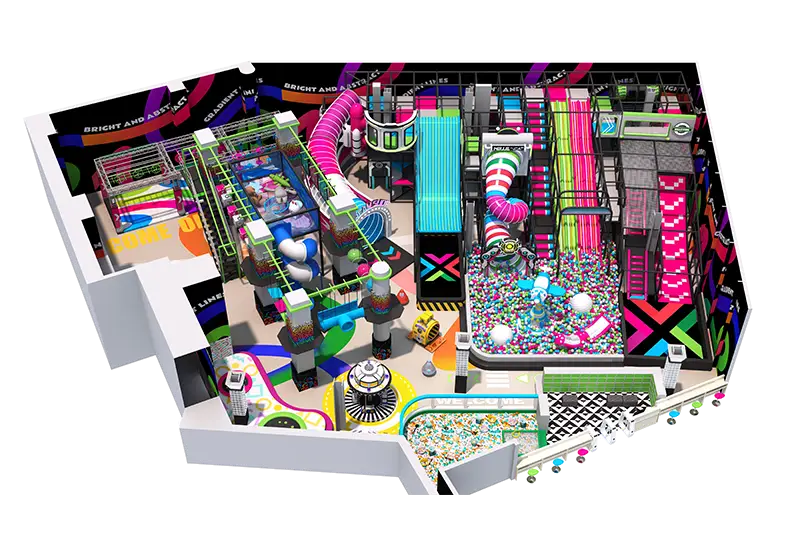
For facilities expanding or replacing aging units, starting with a frame of reference rooted in operational reality helps. If you’re curious about how different design approaches translate into daily management effort, you can access detailed product walkthroughs and material specifications here.
Finally, for teams that want to benchmark their daily procedures against recognized practice, ASTM International publishes relevant playground safety standards (including F1487 for public play equipment and F1292 for surfacing). The International Play Equipment Manufacturers Association also offers guidance on inspection protocols. These resources complement a solid daily habit and provide a defensible framework for your documentation system.
Disclaimer: This article is for informational purposes only and does not constitute professional engineering or safety compliance advice. Always refer to your equipment manufacturer’s specific inspection recommendations and consult qualified professionals for compliance with local regulations and standards.