

Every few months, I speak to an operator who has mastered their local market. The weekends are fully booked, the party rooms hum with birthday songs, and the toddler area is a blur of soft-play tumbles. Then they ask the question that changes everything: “Where should we open next?”
The honest answer is no longer “just find an empty retail unit anywhere.” Macro shifts—urbanization waves, generational parenting habits, even heat waves—are carving out a handful of geographies where the demand for commercial family entertainment is expanding at a pace most operators haven’t seen in a decade. The following five markets aren’t just growing; they’re reshaping how operators plan their footprints. If you are mapping out your next location, you’ll want to understand the forces at work before you start browsing for a comprehensive indoor play setup that fits local needs.
Saudi Arabia: From Vision to Visitation
The transformation is hard to overstate. Saudi Arabia’s Quality of Life Program, part of Vision 2030, explicitly targets a rise in household spending on entertainment from 2.9% to 6% by the decade’s end. Alongside, the General Entertainment Authority has greenlit hundreds of family-centric attractions. A 2024 report by PwC Middle East noted that the kingdom’s leisure and entertainment sector could generate over $1.2 billion annually by 2030.
Why it matters for operators: the combination of a young population (nearly 65% under 35), rising female workforce participation—which creates demand for supervised children’s recreation—and an appetite for year-round indoor experiences in a climate where summer temperatures regularly cross 45°C makes Saudi cities like Riyadh, Jeddah, and Dammam exceptional ground. Malls are actively recruiting experiential tenants. In many new developments, an anchor indoor attraction is now as essential as a supermarket. When scouting sites, operators consistently flag that finding a partner who can deliver solutions tailored to high-traffic mall environments becomes the difference between a four-month soft opening and a year of redesigns.
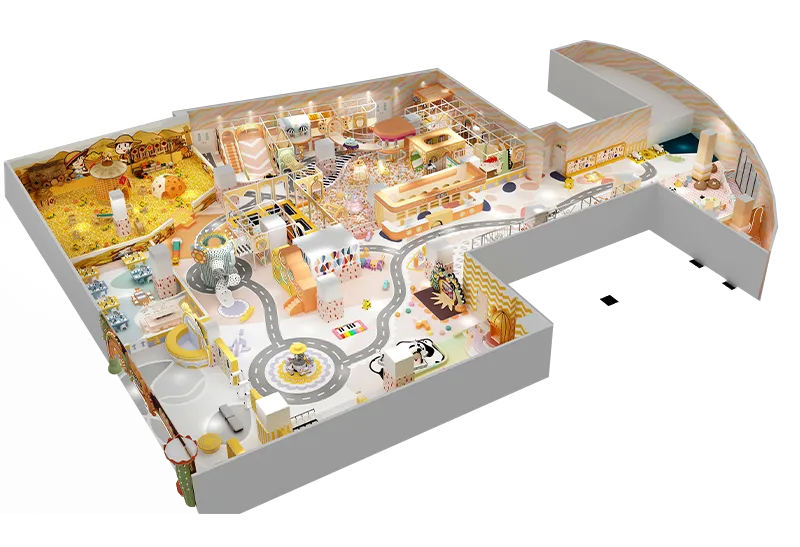
Vietnam: A Demographic Sweet Spot on the Move
Vietnam’s appeal isn’t a single policy; it’s a demographic hum. With a median age around 31 and a rapidly urbanizing middle class, the country is seeing a surge in nuclear families living in dense city centers like Ho Chi Minh City and Hanoi. According to the World Bank, Vietnam’s urban population grew from 37% in 2015 to over 41% in 2024, and the shift toward apartment living means families are actively seeking third spaces where children can move freely.
What makes this market unique is the pace at which a safety-conscious culture is intersecting with international standards. Vietnamese parents are increasingly researching equipment certifications before booking a play session or a birthday party. This has rewarded operators who use designs that clearly communicate safety features and adhere to EN 1176 or ASTM F1918 guidelines. It’s not enough to just fill a space with colorful obstacles anymore; operators are choosing play area designs built around visible safety certifications to build trust quickly. The rental-per-square-meter economics in districts like Binh Thanh or Cau Giay can be compelling—if you avoid the common pitfall of over-building a structure that local tastes don’t yet embrace.
Mexico’s Secondary Cities: The Tier-2 Opportunity
Guadalajara, Monterrey, Querétaro, Mérida—these names keep surfacing in franchise disclosure documents and developer prospectuses. While Mexico City remains competitive and expensive, the secondary cities are experiencing an influx of young professionals, many returning from abroad with different expectations for their children’s leisure time. The Mexican Association of Shopping Centers (ACE) reported in 2025 that experiential tenant mix in tier-2 city malls has nearly doubled over three years.
Crucially, these cities still have accessible commercial real estate rates and lower penetration of large-format family entertainment centers. An operator who opens a venue with a strong toddler zone, a dedicated “big kid” climbing area, and a well-run café can quickly become the default destination for weekend outings. The trade-off: the market rewards operators who adapt the thematic elements. A pirate ship theme that works in Texas often falls flat in Querétaro; storytelling and color palettes should reflect local culture. This is where the ability to customize becomes more than a nice-to-have. Many successful entrants are collaborating with suppliers that offer custom indoor play configurations for franchise rollouts, ensuring each unit feels both brand-consistent and locally resonant.
Poland: The CEE Hub That’s Quietly Outpacing Its Neighbors
Poland’s indoor play sector might not dominate industry headlines, but the data tells a striking story. Euromonitor figures from late 2025 pointed to a compound annual growth rate above 8% in family indoor entertainment spend, outpacing Western European markets. The drivers are practical: a strong economy relative to the CEE region, a housing boom that has placed families in apartments with limited outdoor private space, and EU structural funds that have subsidized community-oriented developments.
In cities like Wrocław, Kraków, and the Tricity area, planners have started requiring child-friendly amenity spaces in new residential and mixed-use projects. This has created a parallel opportunity: integrated, small-footprint indoor play spaces within serviced apartment complexes, public libraries, and wellness centers. The procurement cycle here often involves public or semi-public tenders that place heavy emphasis on documentation—from fire certification to abrasion-resistance reports. I’ve watched well-capitalized operators lose bids because their equipment documentation wasn’t up to EU scrutiny. The ones who win don’t just have a catalog; they come equipped with an approach that treats compliance as a pre-assembled asset. Many will not say it publicly, but they lean toward providers who understand that a turnkey play facility designed for EU regulatory reviews is worth far more than a container of uncertified parts.
United States (Sun Belt & Suburban Shift): An Old Market, a New Map
The U.S. isn’t a new market, but the map of growth within it has been redrawn. Post-pandemic, the Sun Belt—Texas, Florida, North Carolina, Arizona—has absorbed massive domestic migration. The U.S. Census Bureau’s 2025 estimates show that seven of the ten fastest-growing metro areas sit in this belt. With that migration comes new housing subdivisions, new commercial centers, and a critical lag: entertainment infrastructure hasn’t caught up to the rooftops.
Operators are now placing bets on suburban communities where the nearest quality indoor play facility is a 40-minute drive away. These locations favor a model that combines a robust physical play environment with party hosting logistics and a subscription-based open-play model. However, the capital hurdle is real: U.S. build-outs must comply with local fire marshal reviews, ADA accessibility requirements, and surfacing impact attenuation tests. A common thread among operators who opened in 2024–2025 and reached break-even within 18 months is that they didn’t design in isolation. They sought out a partner who could provide play structure solutions that streamline ASTM and ADA compliance from the first floorplan draft, avoiding a stack of change orders later.
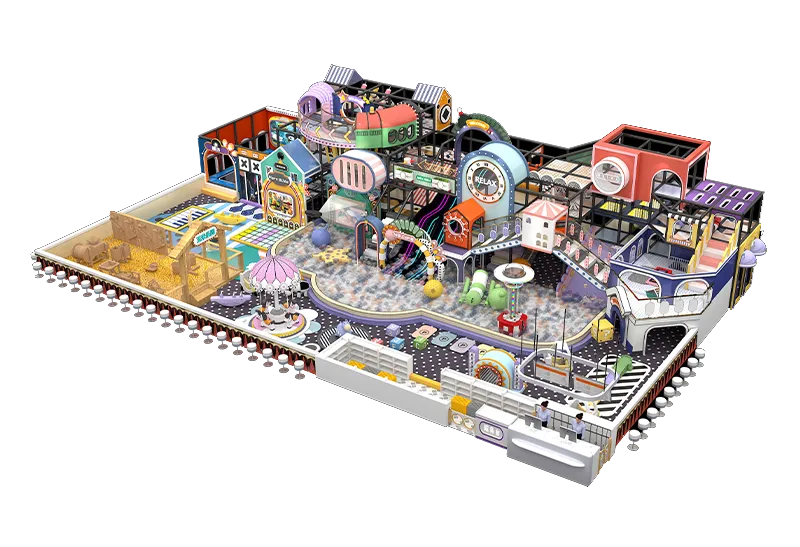
What This Means for Your Next Move
Across all five markets, three patterns stick:
-
Regulatory readiness is a market-entry weapon. Whether it’s Saudi GEA approvals, EN 1176 in Poland, or ASTM/ADA in the U.S., documentation speed determines opening speed.
-
Local adaptation beats generic catalogs. Themes, color, even the ratio of quiet vs. active zones need tweaking from Hanoi to Monterrey.
-
Operators are valuing supply chain predictability over bargain pricing. Delayed shipments from multiple fragmented vendors have taught the industry that a single point of accountability for design, manufacturing, and after-sales is worth a premium.
If you’re at the stage where market research is turning into site visits and floorplans, you’ve probably realized that choosing a partner isn’t just about a product catalog. It’s about whether that partner has navigated the specific regulatory landscape of your target region, whether their design team can handle cultural customization without starting from zero each time, and whether their logistics track record holds up. At Qilong, we’ve spent years developing the experience to bring that kind of partnership to operators expanding into complex and diverse markets. Our design philosophy is built around the idea that safety standards and playful aesthetics aren’t competing interests; they belong in the same revision of a floorplan. If you want a smoother path from feasibility study to grand opening, explore Qilong’s approach to planning region-ready play attractions—you may find it changes how you think about your timeline and budget.
Disclaimer: This article draws on publicly available data from PwC, the World Bank, ACE, Euromonitor, and the U.S. Census Bureau. Regional market conditions can shift; always conduct independent due diligence before entering a new geography. Mentions of standards such as EN 1176, ASTM F1918, and ADA are for informational purposes and do not constitute certification claims for any specific product without reference to its individual documentation.